Understanding Yarn Fiber Types
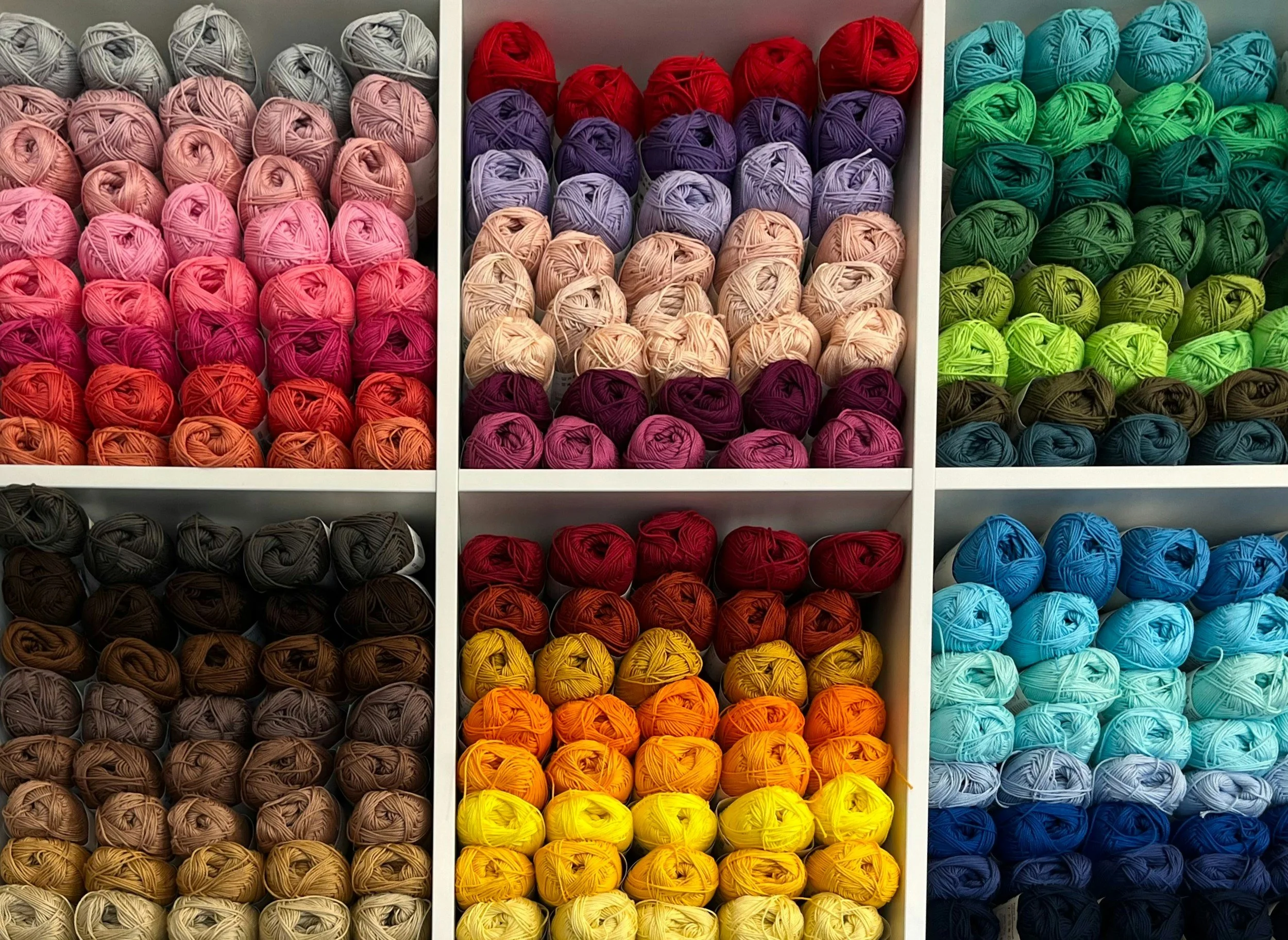
Walking into a yarn shop can feel overwhelming. Shelves are filled with different colors, textures, and fiber blends, each with its own unique qualities. Choosing the right yarn isn't about finding the "best" one—it's about finding the right yarn for your project.
Acrylic Yarn
Acrylic is one of the most beginner-friendly fibers available. It's affordable, easy to care for, widely available, and comes in nearly every color imaginable. Because it can usually be machine washed and dried, it's a great choice for blankets, toys, scarves, and everyday projects.
While acrylic isn't as breathable as natural fibers, modern acrylic yarns have become much softer than they used to be, making them an excellent option for new makers.
Cotton Yarn
Cotton is smooth, durable, and highly absorbent. It has very little stretch, which gives excellent stitch definition and creates crisp, structured projects.
Cotton shines in warm-weather garments, market bags, dishcloths, washcloths, and home décor. Because it doesn't have much elasticity, some beginners find it a little harder on their hands compared to wool or acrylic.
Wool
Wool is loved for its warmth, elasticity, and ability to spring back into shape after being stretched. Those qualities make it incredibly forgiving while knitting or crocheting and a favorite for garments and accessories.
Different breeds of sheep produce different types of wool, each with its own feel and characteristics.
Merino Wool
Merino is considered one of the softest wools available. It's lightweight, warm without being bulky, naturally moisture-wicking, and gentle enough for many people who find traditional wool itchy.
Merino is a wonderful choice for sweaters, hats, shawls, and anything worn close to the skin.
Superwash Merino
Superwash merino has been specially treated so it can usually be machine washed without felting. It combines the softness of merino with easier care, making it one of the most popular choices for wearable projects.
Keep in mind that superwash yarn can sometimes grow slightly after washing, so checking your gauge and washing a swatch first is always a good idea.
Bamboo
Bamboo yarn is silky smooth with a beautiful drape and subtle sheen. It's naturally breathable and feels cool against the skin, making it a lovely option for lightweight garments and summer accessories.
Because bamboo is slippery and has little elasticity, it can feel a bit different to work with than wool or acrylic.
Linen
Linen starts out crisp and becomes softer with every wash. It creates breathable fabrics with beautiful drape and is especially popular for warm-weather clothing and home textiles. Like cotton, it has very little stretch but rewards you with a timeless, elegant finish.
Blended Fibers
Many yarns combine different fibers to take advantage of each one's strengths. A wool-acrylic blend might offer warmth with easier care, while cotton blended with bamboo creates breathable fabrics with extra softness and drape.
There isn't a single "best" fiber, only the one that best suits your project.